Types of Drugs Detected by Urine Drug Tests (AADK)

Types of Drugs Detected by Urine Drug Tests (AADK)

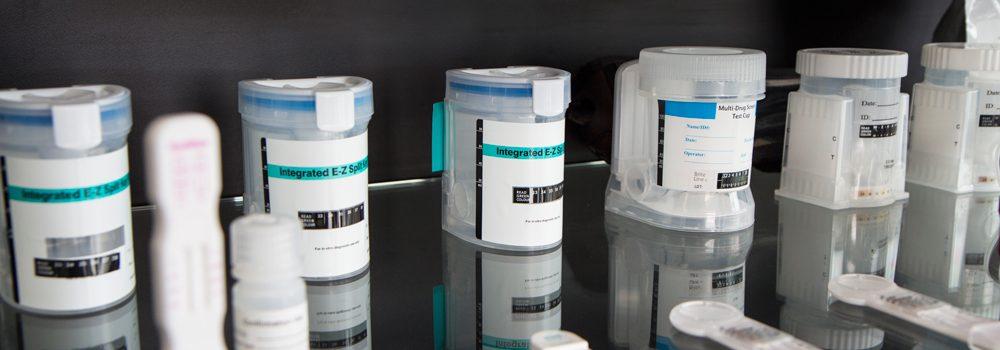
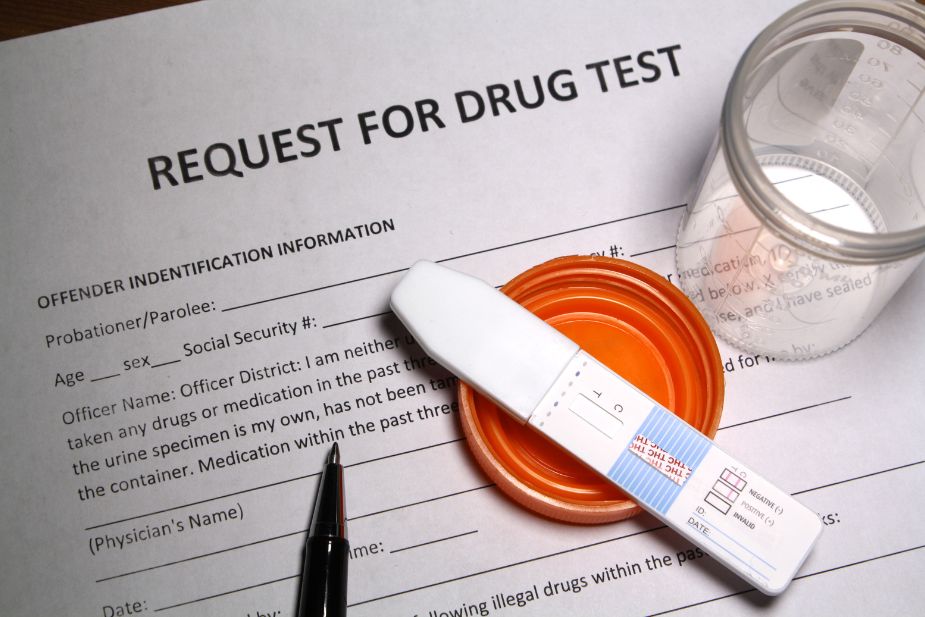
Did you know that the urine drug tests are used by Malaysian authorities to detect drugs in a person's body? Other than the Royal Malaysian Police (or Polis Diraja Malaysia / PDRM), the National Anti-Drugs Agency (or Agensi Antidadah Kebangsaan / AADK) also have the authority to drug test suspected users.

AADK officers and members have the authority to conduct Urine Screening Tests on anyone suspected as a drug user or addict only through their Urine, as listed under Section 3 (1) of the Drug Addicts (R&P) Act 1983.

If the first Screening Test is positive, the urine sample will be sent to the Drug Pathology Laboratory at a hospital (according to the type of drug). It may take 7 to 14 working days or up to 3 months to get confirmation of the urine drug test results from the hospital.

In some cases, a positive result may have been produced by the first urine drug screening test, but the hospital results may come up negative. This is because the drug content in a person’s body is dependent on the type of drug used. In cases like these, the suspect may be released.

The results from the hospital drug laboratory are the final results that will be used by the AADK Investigating Officer to conduct charges against the suspected user.

Source: AADK


Disclaimer: The information provided in this article is for general reference only. Please seek advice from professionals according to your business’s needs.

Written by Vivien Mah

Back to all articles
  • Cut-off levels in drug testing: An employer’s guide

    Cut-off levels in drug testing: An employer’s guide

    Drug testing cut-off levels determine whether a screening result is reported as negative or non-negative. In this article, we explain how these thresholds are set, why saliva drug testing kits typically have lower cut-offs than urine tests, and what this means for workplace drug screening in Malaysia.

    Cut-off levels in drug testing: An employer’s guide

    Drug testing cut-off levels determine whether a screening result is reported as negative or non-negative. In this article, we explain how these thresholds are set, why saliva drug testing kits typically have lower cut-offs than urine tests, and what this means for workplace drug screening in Malaysia.

  • How to Detect Alcohol Use at Work Sensitively

    How to Detect Alcohol Use at Work Sensitively

    This guide breaks down subtle, respectful, and compliance-friendly ways Malaysian employers can detect alcohol impairment early — without confrontation, assumptions, or conflict.

    How to Detect Alcohol Use at Work Sensitively

    This guide breaks down subtle, respectful, and compliance-friendly ways Malaysian employers can detect alcohol impairment early — without confrontation, assumptions, or conflict.

  • Beyond OSHA Section 15: Reasonable suspicion D&A testing

    Beyond OSHA Section 15: Reasonable suspicion D&A testing

    OHS professionals must understand how to execute legally defensible 'Reasonable Suspicion' testing to meet OSHA Section 15 compliance. Learn the step-by-step procedure for objective evidence gathering.

    Beyond OSHA Section 15: Reasonable suspicion D&A testing

    OHS professionals must understand how to execute legally defensible 'Reasonable Suspicion' testing to meet OSHA Section 15 compliance. Learn the step-by-step procedure for objective evidence gathering.

  • Commonly used drugs in Malaysia

    Most commonly used drugs in Malaysia — 2025 update

    Malaysia’s drug landscape is changing — with ketum, meth, pills, and vape-based drugs now more commonly linked to everyday possession than major trafficking cases. Recent data shows most arrests involve personal use, making awareness and prevention more important than ever.

    Most commonly used drugs in Malaysia — 2025 update

    Malaysia’s drug landscape is changing — with ketum, meth, pills, and vape-based drugs now more commonly linked to everyday possession than major trafficking cases. Recent data shows most arrests involve personal use, making awareness and prevention more important than ever.

1 of 4