
Many employers assume a drug test simply shows a positive or negative result. In reality, every professional drug screening kit works based on a defined cut-off level.
If you are managing workplace drug testing in Malaysia, understanding cut-off levels is important. It helps you interpret results correctly, choose appropriate screening methods, and ensure your testing program remains fair and defensible.
In this article, we explain what drug testing cut-off levels are, why they exist, and why saliva drug testing kits typically have lower cut-off levels compared to urine tests.
What are cut-off levels in drug testing?
A cut-off level is the minimum concentration of a drug or its metabolite that must be present in a sample for the test to return a non-negative result.
Cut-off levels are usually measured in ng/mL, which stands for nanograms per millilitre.
If the drug concentration is below the cut-off level, the result is reported as negative.
If the concentration meets or exceeds the cut-off level, the result is considered non-negative and should be sent for confirmatory laboratory testing.
These thresholds are not random. They are determined through scientific validation studies and align with recognised industry standards used in workplace drug screening programs.
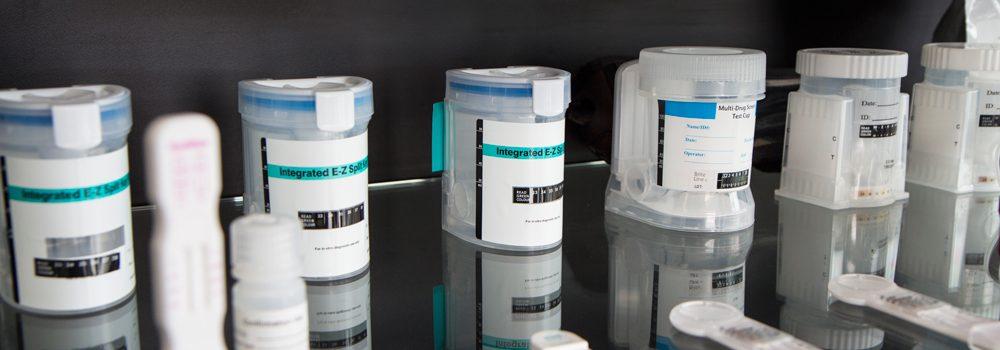
For example, standard multi-panel urine screening devices such as the SureStep EZ Split Key Cup urine drug testing kit are calibrated according to established cut-off levels to ensure reliable preliminary results.
Why do cut-off levels exist?
Cut-off levels serve several important purposes in workplace drug testing.
First, they help prevent false positives caused by trace environmental exposure. In some situations, individuals may be exposed to very small amounts of substances without actual drug use. Cut-off thresholds ensure that insignificant traces do not trigger a non-negative result.
Second, they avoid detecting historical drug use that is not relevant to workplace safety. Drug metabolites can remain in the body for varying periods of time. The cut-off level ensures the test focuses on meaningful concentrations.
Third, cut-offs improve fairness and defensibility. In safety-sensitive industries such as manufacturing, construction, logistics, and oil and gas in Malaysia, test results may have serious employment implications. Defined thresholds help ensure consistent and objective screening.
It is important to understand that a lower cut-off does not automatically mean a better test. Likewise, a higher cut-off does not mean a test is less accurate. The correct threshold depends on the purpose of testing and the biological sample being analysed.
Why saliva drug testing kits often have lower cut-off levels
One of the most common questions employers ask is why saliva drug tests typically have lower cut-off levels compared to urine tests.
The answer lies in biology and testing objectives.
Different biological matrices
Urine and saliva are very different biological samples.
Urine testing primarily detects drug metabolites, which are the by-products created after the body processes a substance. These metabolites can accumulate in higher concentrations.
Saliva, also known as oral fluid, often contains lower concentrations of the parent drug. Because drug levels in saliva are generally lower than in urine, the cut-off levels must also be set lower to ensure reliable detection.
Detection of recent drug use
Saliva drug testing is widely used when recent use detection is the priority. Drugs appear in oral fluid shortly after consumption, often within minutes to hours.
In Malaysia, saliva testing is increasingly used for on-site workplace screening and roadside enforcement because it is less invasive and more difficult to adulterate.
Since saliva testing focuses on more recent exposure and the concentrations present are typically lower, cut-off levels are adjusted accordingly.
Different testing objectives
Urine testing is often chosen when a longer detection window is required.
Saliva testing is typically selected when the focus is on identifying more recent drug exposure.
Cut-off levels reflect these different objectives. Each testing method is calibrated for its intended application.
Does a lower cut-off mean the test is more sensitive?
This is a common misconception.
Sensitivity refers to a test's ability to correctly identify the presence of a drug when it is truly there. Cut-off levels are only one component of overall test performance.
A saliva test with a lower cut-off is not automatically more sensitive in a general sense. It is calibrated specifically for oral fluid concentrations. Properly validated saliva drug testing kits are designed to balance sensitivity and specificity within their intended use.
When used correctly and followed by confirmatory testing where required, both urine and saliva tests can provide reliable and defensible results.
Preliminary screening versus confirmatory testing
It is important to understand that on-site drug testing kits provide preliminary screening results.
A non-negative screening result should always be confirmed using laboratory methods such as GC-MS or LC-MS/MS analysis. These confirmatory tests use more advanced instrumentation and apply their own validated cut-off levels.
Screening cut-offs are designed for rapid decision-making in the workplace. Confirmatory cut-offs are designed for definitive identification and legal defensibility.
If you are implementing a drug testing policy in Malaysia, ensure your procedures clearly outline the requirement for laboratory confirmation following any non-negative result.
Final thoughts
Drug testing cut-off levels are scientifically determined thresholds that ensure fairness, accuracy, and consistency in workplace screening.
Saliva drug testing kits typically use lower cut-off levels because oral fluid contains lower drug concentrations and is designed to detect more recent use.
Understanding how these thresholds work helps employers interpret results correctly and maintain a defensible workplace drug testing program.
For more information on validated and professional drug testing solutions, explore Andatech Malaysia’s range of professional drug testing kits or contact our team for guidance.
Disclaimer: The information provided in this article is for general reference only. Please seek advice from professionals according to your business’s needs.
Written by Andatech Malaysia