The recent drink driving tragedy in Klang has left a community in mourning and a nation searching for answers. Dashcam footage of a vehicle traveling at high speed against the flow of traffic has sparked a significant legal shift, with the driver now facing murder charges under Section 302 of the Penal Code.
To the sober observer, driving the wrong way seems like an impossible mistake to make. However, at high Blood Alcohol Concentration/Content (BAC) levels, the human brain undergoes a catastrophic failure of spatial awareness. It isn’t just that the driver is "making a bad choice"; it’s that the brain’s internal GPS has physically shut down.
Here is the science behind the "Auto-Pilot" illusion.
1. The shutdown of the "Parietal GPS"
The parietal lobe is the part of the brain responsible for processing sensory information and mapping our position in 3D space. It tells us where we are in relation to the curb, the median strip, and other vehicles.
According to research shared by USA’s National Institute on Alcohol Abuse and Alcoholism (NIAAA), alcohol acts as a potent depressant on the parietal cortex. As BAC levels climb, the driver suffers from Allocentric Disorientation. They lose the big picture of the highway system and become trapped in Egocentric Vision, processing only what is directly in front of their bumper, while completely losing the ability to map the wrong side of the road.
2. Cognitive tunneling and "visual myopia"
Driving is a task of "divided attention." A safe driver constantly shifts focus between the speedometer, side mirrors, and peripheral road signs. High-level intoxication destroys this ability through a phenomenon known as Cognitive Tunneling.
Alcohol is known to impair peripheral vision and cause tunnel vision. This makes it difficult to perform simple tasks and lead to slower reaction times. On top of this, reaction time is delated as communication between neurotransmitters in the brain are weakened.
3. Muting the "Conflict Monitor"
Why doesn't a driver stop when they see another car heading toward them? The answer lies in the Anterior Cingulate Cortex (ACC), the brain’s "conflict monitor." Its job is to detect errors and trigger a "fight or flight" response when something is wrong.
Research indicates that alcohol can suppress the ACC’s function. Even if the driver’s eyes see an oncoming vehicle, the brain fails to register the "conflict." The alarm bells don't ring. The driver continues forward in a state of chemical apathy, unaware that a fatal collision is imminent.
4. The synergistic trap of poly-drug use
In many high-profile cases, including the recent incident in Klang, reports suggest the presence of multiple substances. When alcohol is mixed with other drugs (such as THC or benzodiazepines), the result is a Synergistic Effect.
Alcohol increases the absorption rate of many other drugs, leading to a "dissociative state." In this condition, the body can perform mechanical tasks (like steering and accelerating) while the conscious mind is essentially "offline." The driver is physically present but neurologically absent.
Data over perception
The most dangerous takeaway from the science of impairment is this: The part of your brain that judges your sobriety is the first part to be impaired.
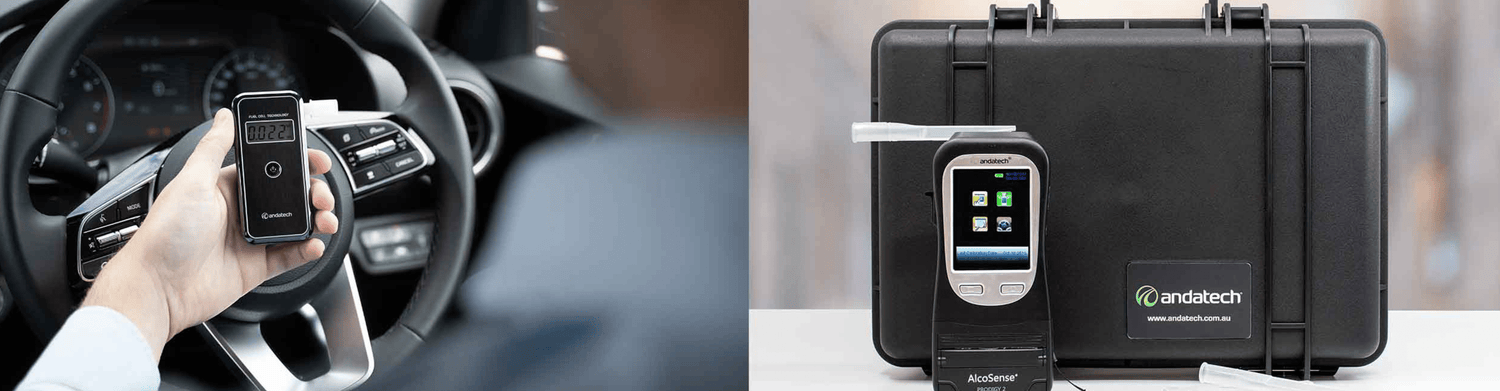
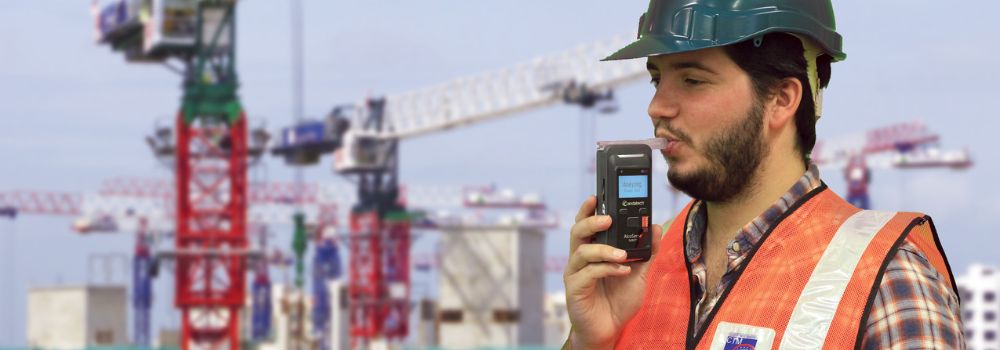
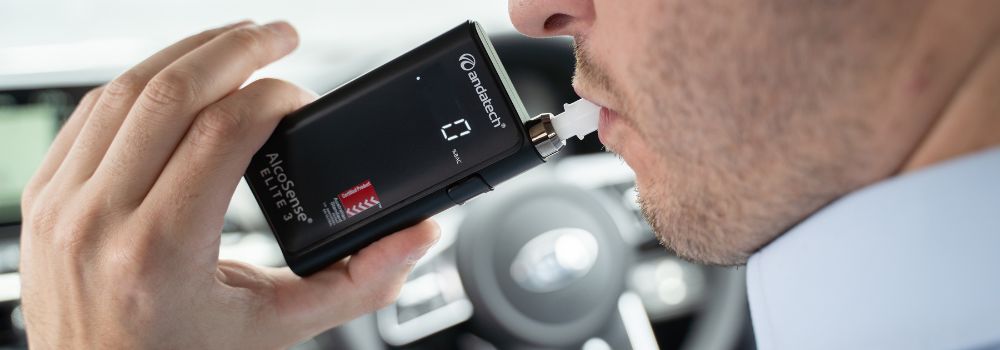
You cannot "feel" your way to safety because your perception is the very faculty that alcohol disables. This is why objective, scientific measurement is the only reliable safeguard. For workplaces, breathalyzers are the fastest and most accurate way to measure one’s intoxication level and make informed decisions.
In a world where a single lapse in spatial awareness can lead to a Section 302 charge and a lifetime of tragedy, data is the only truth we have left.
Disclaimer: The information provided in this article is for general reference only. Please seek advice from professionals according to your business’s needs.
Written by Andatech Malaysia